A different way of calculating distances
Target: to learn and apply Taxi Geometry
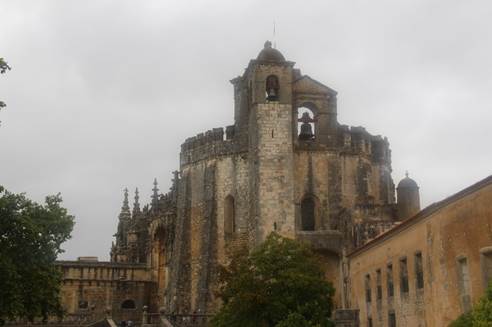
Tourist route: Christ Convent (Tomar) - Tomar city - Baixa Pombalina (Lisbon)
The city of Tomar presents an urban nucleus tendentially forming a grid composed of 9 parallel axes of east / west orientation and 3 axis with north / south orientation, defining rectangular blocks.
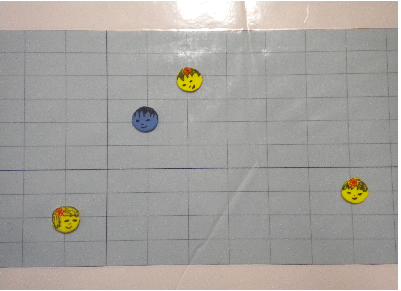
Although Tomar presents a tendentially regular urban nucleus mesh, in cities which urban grid is an orthogonal grid to calculate the distance between two points a new metric is needed. The usual metric of Euclidean Geometry is replaced by a metric in which the distance between two points is the sum of the absolute differences between their coordinates.
We are faced with taxi Geometry, which first appeared in Topology, with theoretical support in the metric spaces. The Taxi Geometry (Taxicab Geometry), developed by Russian Hermann Minkowski in the 19th century, has many properties similar to those of Euclidean geometry: the same definition of point and straight-line, taxi-distance (distance in taxi geometry) is always non-negative and is only zero if the points match, it is symmetric and still satisfies the triangular inequality. The metric used in Taxi Geometry thus becomes more suitable for describing urban Geography than Euclidean Geometry.